
Article
A City of the Past, Present and Future
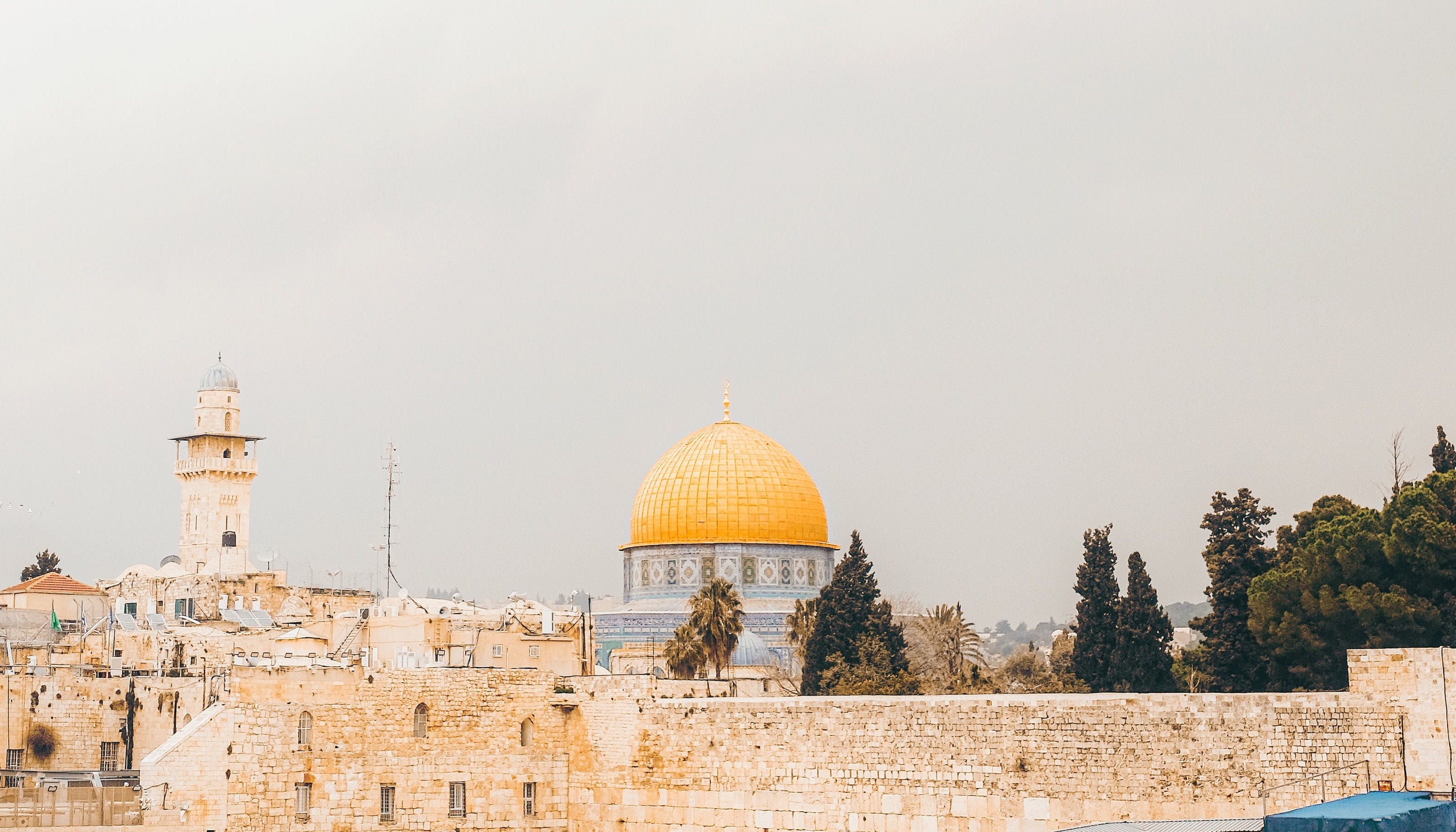
Did you know the name Jerusalem means “city of peace”? That might surprise you, because in the modern world—and in the ancient world as well—Jerusalem has been anything but peaceful. More battles have been fought at Jerusalem’s gates than any other city on the face of the earth.
So it shouldn’t surprise you that, eventually, she will find herself at the center of the world’s anger when the events of the end times begin to unfold.
Several years ago, I remember a political campaign season when people were saying, “It’s the economy, stupid.”
These days, when you’re looking at international politics, you might as well say, “It’s Jerusalem, stupid.”
The world’s headlines right now are on Russia and Ukraine. Eventually—hopefully—that crisis will end. You can rest assured that, when it does, the world’s attention will turn back to Jerusalem. If another geopolitical crisis breaks out, Israel will likely be wrapped up in it.
That’s why Jimmy Evans and other Bible prophecy teachers are always telling us to keep our eyes on Jerusalem. When the city’s name pops into the headlines, we should pay attention.
Jerusalem will always be at the center of the storm, for one simple reason: She is claimed by two world religions, Judaism and Islam, as their own.
Jerusalem is a city of the past, the present and the future.
Jerusalem is a City of the Past
When King David made Jerusalem the capital of Israel, the city became known as the “City of David.” The first temple of the Jewish people was built—and then rebuilt—in Jerusalem.
Ezekiel 43 tells us how the glory of the Lord came to dwell in that place:
Then the Spirit took me up and brought me into the inner courtyard, and the glory of the Lord filled the Temple. 6 And I heard someone speaking to me from within the Temple, while the man who had been measuring stood beside me. 7 The Lord said to me, “Son of man, this is the place of my throne and the place where I will rest my feet. I will live here forever among the people of Israel. They and their kings will not defile my holy name any longer by their adulterous worship of other gods or by honoring the relics of their kings who have died…9 I will live among them forever.”—Ezekiel 43:5-9 NLT
But in that very same place—the Temple Mount, where the first and second temples once stood before they were destroyed—Muslims also believe that the prophet Mohammed ascended to heaven. They commemorated it by building a shrine on the Temple Mount known as the “Dome of the Rock.”
As you might well imagine, this tiny slice of real estate has become an unbelievably tense place. In fact, over the past few weeks, it has been the site of riots and attacks by predominantly Muslim Palestinians upon Jewish citizens of Israel.
Jerusalem is a City of the Present
In 1948, after the modern state of Israel was declared—itself a fulfillment of Bible prophecy—a war of independence left the city of Jerusalem divided. Jordan retained control over the Old City, including the Temple Mount and most of the city’s sacred, historic sites.
But then Israel’s enemies united to attack her in 1967 during the Six Day War. During that conflict, Israelis were able to capture the Old City and reunify all of Jerusalem. In that electrifying moment, Jerusalem fell under Jewish control for the first time in many centuries.
This fulfilled an astounding Bible prophesy:
And give them this message from the Sovereign Lord: I will gather the people of Israel from among the nations. I will bring them home to their own land from the places where they have been scattered. 22 I will unify them into one nation on the mountains of Israel. One king will rule them all; no longer will they be divided into two nations or into two kingdoms.—Ezekiel 37:21-22 NLT
And in a conversation about the end times, Jesus promised that Jerusalem would be “trampled down by the Gentiles until the period of the Gentiles comes to an end” (Luke 21:24, NLT).
Jerusalem is a City of the Future
The Bible makes it clear that our world’s final conflict will not be in the cosmopolitan cities of the world, like Paris, London, New York or Tokyo. It won’t be in Rome or Los Angeles or Beijing.
According to the words of the Lord, it will be in Jerusalem:
“I will make Jerusalem like an intoxicating drink that makes the nearby nations stagger when they send their armies to besiege Jerusalem and Judah. 3 On that day I will make Jerusalem an immovable rock. All the nations will gather against it to try to move it, but they will only hurt themselves.”—Zechariah 12:2-3, NLT
The nations of the world will gather against Jerusalem, but the Lord will strengthen and protect her with divine power.
This is why we watch with great interest what is happening in the Middle East, today and in the future. Israel has a crucial friend in the United States, but the other nations of the world continue to stand against Israel. Former Iranian president Mahmoud Ahmadinejad once said “the regime occupying Jerusalem must be eliminated from the pages of history.” The UN General Assembly, in 1991, declared Zionism a “form of racism and racial discrimination,” though that resolution was eventually repealed. Nations like Syria, Turkey, Russia and others have been the source—directly and indirectly—of military attacks on the people of Israel.
Why? Why does this ancient city of less than 900,000 people always receive so much of the world’s attention? It’s smaller than San Jose, California. It’s around the same size as Columbus, Ohio.
No hostile regimes are promising to wipe San Jose or Columbus off the map.
But the attention of the world remains riveted on Jerusalem, just as God said it would be. And just as it will be until the end of time.
Israel is a sign of the times and because of this, Jerusalem should always have our attention.
Psalm 122:6 tells us to pray for the peace of Jerusalem—the “city of peace”—but we should know true peace won’t come to this beautiful, ancient city until Jesus returns in glory. Only then will she know the true, eternal peace of the Millennial Kingdom.