
Article
Christianity’s Slow Disappearance from Its Birthplace
Something is happening in the very place where our faith began, and hardly anyone is talking about it.
I came across an article this week that I had been saving from the Jewish News Syndicate, written by Aviram Bellaishe, and I haven’t been able to shake it. He points out that Bethlehem, the little town where Jesus was born, is quietly emptying of its Christians, Brian Schrauger has highlighted this a few times in his reports. Meanwhile at the very same time, in a place like Tehran, the church is secretly growing. Bellaishe called it a tale of two Christianities. One is disappearing out in the open. The other is being born in the shadows. And when you set those two pictures side by side, you start to see something the Bible told us to expect a long time ago.
Let me give you the numbers because they are staggering.
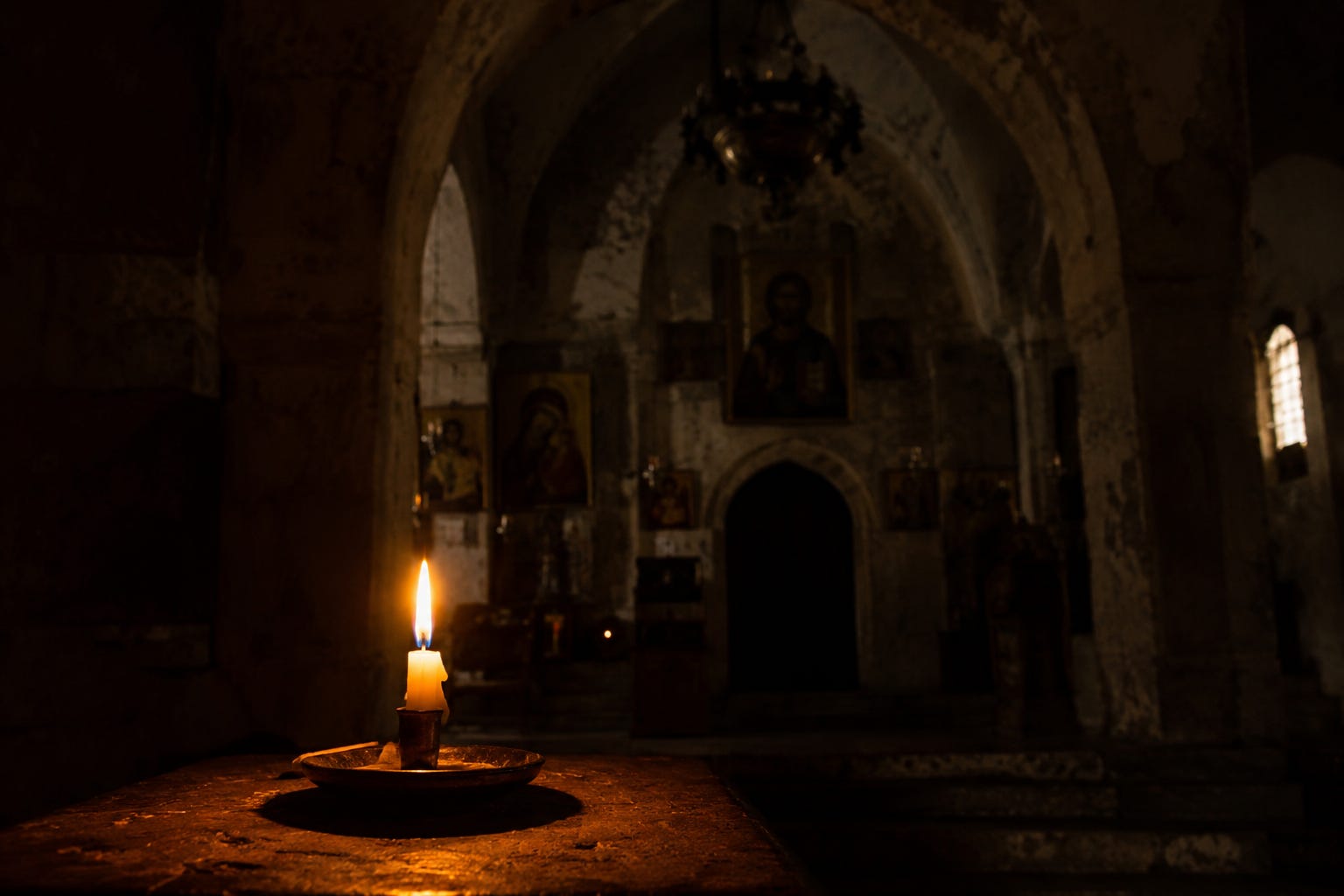
A Church Vanishing in Slow Motion
In 1950, Bethlehem was about 86 percent Christian. Today that number has fallen to somewhere around 10 percent. Since the Hamas attacks of October 7, 2023, more than 140 Christian families have packed up and left. The town that holds the birthplace of Christ is losing the very people who have kept that witness alive for two thousand years.
And it isn’t only Bethlehem. In Iraq, there were roughly 1.5 million Christians in 2003. Today there are fewer than 250,000. In Syria, a Christian community of about two million before 2011 has shrunk to somewhere between 300,000 and 600,000. Last June, a suicide bomber walked into a church in Damascus during morning prayers, with hundreds of worshipers inside, and murdered 25 of them. In Iran, the courts sentenced 96 believers to a combined 280 years in prison in a single year—their only crime being that they gathered in house churches to worship Jesus.
Maybe the most sobering example of all is Turkey. In 1914, Christians made up somewhere between 20 and 25 percent of the population of Anatolia. Today they are two-tenths of one percent. An entire Christian civilization gone in the very region where the apostle Paul planted churches and John wrote to the seven churches of Revelation has been almost completely erased.
This is what it looks like when Christians become a minority in a land that no longer has room for them.
Why This Should Not Surprise Us
Now I want to say something that may sound strange at first. As heartbreaking as all of this is, and it is heartbreaking, it shouldn’t catch us off guard. Jesus told us this would happen. On the night before He went to the cross, He looked His disciples in the eye and said:
18 If the world hates you, you know that it hated Me before it hated you. 19 If you were of the world, the world would love its own. Yet because you are not of the world, but I chose you out of the world, therefore the world hates you. 20 Remember the word that I said to you, ‘A servant is not greater than his master.’ If they persecuted Me, they will also persecute you. If they kept My word, they will keep yours also. 21 But all these things they will do to you for My name’s sake, because they do not know Him who sent Me.
— John 15:18–21 (NKJV)
Jesus never promised His followers that the world would admire them. He promised the opposite. “If they persecuted Me, they will also persecute you.” The hostility our brothers and sisters are facing across the Middle East isn’t a sign that God has lost control. It’s a sign that Jesus told the truth.
The apostle Paul said the very same thing when he wrote to his young friend Timothy. He warned him that the last days would not be comfortable, easygoing days:
1 But know this, that in the last days perilous times will come: 2 For men will be lovers of themselves, lovers of money, boasters, proud, blasphemers, disobedient to parents, unthankful, unholy, 3 unloving, unforgiving, slanderers, without self-control, brutal, despisers of good, 4 traitors, headstrong, haughty, lovers of pleasure rather than lovers of God, 5 having a form of godliness but denying its power. And from such people turn away!
— 2 Timothy 3:1–5 (NKJV)
“Perilous times.” That is the phrase. Paul wasn’t describing a golden age of tolerance and goodwill. He was describing exactly the kind of world we are watching take shape. It’s a world where love grows cold, where truth is treated as the enemy, and where governments and cultures increasingly leave no room for people who belong to Jesus. When a society turns its back on God, the followers of Jesus are almost always the first ones to feel it. They are the canary in the coal mine. When they start to disappear, it tells you the air has already gone bad.
That is why these headlines grieve me, but they do not shake me. Everything the Bible predicted is coming to pass right in front of our eyes.
A Way in the Wilderness
But here is what I love, and here is where the whole story turns. Look again at those two pictures—Bethlehem emptying and Tehran filling. Even as the historic church is being squeezed out in the open, God is doing something extraordinary underground. Iran, one of the hardest places on earth to follow Jesus, is seeing one of the fastest-growing churches in the world. Men and women are risking prison and even risking their lives to follow the very Savior they were raised to hate. Nobody is forcing them. Nobody is making it easy. They simply met Jesus, and they can’t go back.
That is a miracle happening right before our eyes. And it is exactly what God promised He would do:
19 Behold, I will do a new thing, Now it shall spring forth; Shall you not know it? I will even make a road in the wilderness And rivers in the desert.
— Isaiah 43:19 (NKJV)
You can’t stamp out the gospel. You can bomb the buildings, you can imprison the pastors, and you can drive families out of homes their people have lived in for centuries, but the Word of God will still cut a road straight through the wilderness. The blood of the martyrs has always been the seed of the church. What men mean to destroy, God has a way of using to multiply.
What I Believe We Should Do Now
So what do we do with all of this?
First, pray. Take a list of the persecuted church—the believers in Bethlehem, in Damascus, in Tehran—and lay it right next to your Bible. Lift them up the way you would want to be lifted up if it were your family in that situation.
Second, put some feet on those prayers. There are ministries that have been standing with the persecuted church for years—Open Doors and Voice of the Martyrs are two I would point you to—getting Bibles, relief, and encouragement to brothers and sisters we will never meet this side of Heaven. We can’t all go to Damascus or Tehran. But we can help send help. If the Lord has blessed you with a little margin, this is a good and holy place to put some of it.
Third, don’t waste the freedom you still have. If you can carry a Bible into a coffee shop and nobody blinks, you are blessed—and that window may not stay open forever. Use it. Tell somebody about Jesus while it’s still easy to.
And fourth, look up. Jesus said that when we see these things beginning to happen, we are not to hang our heads in fear—we are to lift them up, because our redemption is drawing near (Luke 21:28). The disappearance of the church from its birthplace is not the end of the story. It is a signpost, pointing us home.